

If you are a tile distributor, importer, builder, or retailer, you don’t just sell tiles. You sell performance. You sell trust. You sell reputation.
And nothing hurts business more than:
- Customer complaints after installation
- Shade variation between shipments
- Tiles cracking under load
- Returns that eat into your margin
Many of these issues begin with one simple decision. Choosing the wrong tile type for the wrong application.
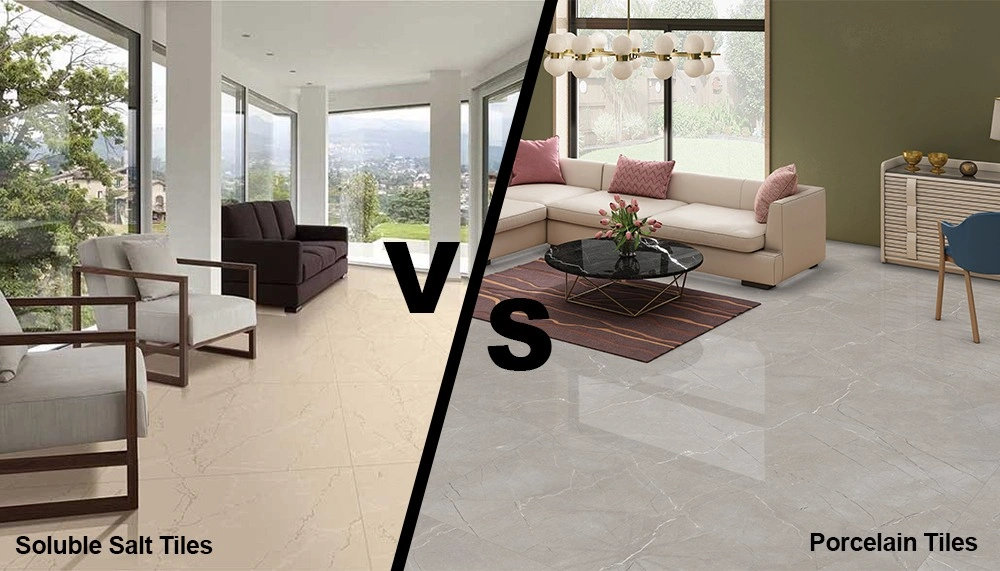
Two of the most common options in the market are soluble salt tiles and porcelain tiles. They may look similar in a showroom. But in real-world performance, they behave very differently.
Let’s break this down from a business perspective.
Technical Comparison: Soluble Salt vs Porcelain Tiles
Below is a side-by-side comparison to make the differences easier to understand.
| Feature | Soluble Salt Tiles | Porcelain Tiles |
| Manufacturing Type | Ceramic tile with surface salt design | High-density tile fired at high temperature |
| Water Absorption | Moderate to high | Very low (below 0.5%) |
| Strength | Suitable for light to moderate traffic | Suitable for heavy traffic |
| Surface Design | Design only on the top layer | Can be uniform throughout |
| Finish | Mostly high gloss | Glossy, matte, textured options |
| Moisture Resistance | Limited | Excellent |
| Scratch Resistance | Moderate | High |
| Best For | Bedrooms, living rooms | Commercial areas, kitchens, and outdoor use |
| Cost | Budget-friendly | Higher initial cost |
What Are Soluble Salt Tiles?
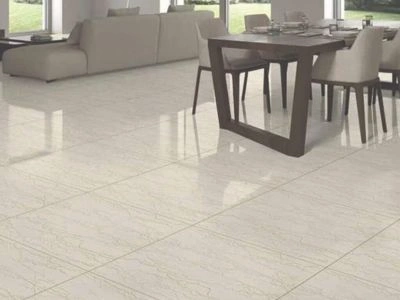
Soluble salt tiles are polished ceramic tiles made using salt printing technology. The design is applied only on the top surface layer, making it suitable for light indoor use but less durable for heavy traffic areas. These tiles are also called nano tiles as nanotechnology is used to print the patterns on it.
From a commercial point of view, they are:
- Cost-efficient to produce
- Popular in price-sensitive markets
- Mostly used for indoor flooring
They are widely accepted in residential segments because they deliver shine at a competitive price.
But here’s the key. They are surface-focused products.
What Are Porcelain Tiles?
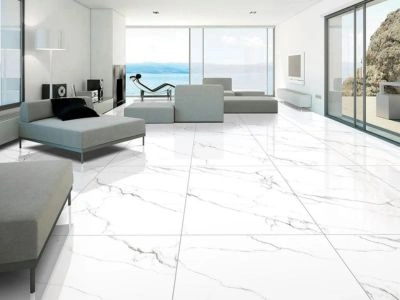
Porcelain tiles are high-density tiles made from refined clay and fired at high temperatures. They have very low water absorption (below 0.5%), making them stronger and more durable than ceramic-based tiles.
From a business standpoint, they offer:
- High structural strength
- Low moisture penetration
- Wider design flexibility
- Stronger long-term performance
They are often specified in projects where durability is critical.
Let’s Talk About Real Business Pain Points
Instead of comparing features blindly, let’s address what actually affects your bottom line.
1. Application Mistakes That Cost Money
One of the biggest mistakes businesses make is recommending based on price instead of application.
Soluble salt tiles are better suited for:
- Bedrooms
- Living rooms
- Low-traffic indoor areas
Porcelain tiles are better suited for:
- Kitchens
- Bathrooms
- Commercial floors
- Outdoor areas
- High footfall zones
When you guide customers correctly, you reduce return claims and increase trust.
2. Long-Term Value vs Short-Term Savings
Many buyers focus only on the initial price per square meter.
Soluble salt tiles:
- Lower upfront investment
- Faster market turnover in budget segments
Porcelain tiles:
- Higher initial cost
- Lower replacement frequency
- Better performance over time
If your customer is building for resale or rental turnover, soluble salt may be enough. If they are building for durability and long-term use, porcelain becomes more economical in the long run.
3. Moisture and Climate Considerations
In humid or wet environments, tile performance changes.
Soluble salt tiles absorb more moisture compared to porcelain tiles. Over time, this may impact durability in certain areas.
Porcelain tiles, with very low water absorption, are safer for:
- Coastal regions
- Wet rooms
- Exterior installations
If climate is a factor in your region, this technical difference becomes important.
4. Design Expectations from Modern Buyers
Today’s customers are more design-aware.
Soluble salt tiles typically offer:
- Glossy finishes
- Traditional marble-inspired looks
Porcelain tiles offer:
- Matte and textured surfaces
- Contemporary finishes
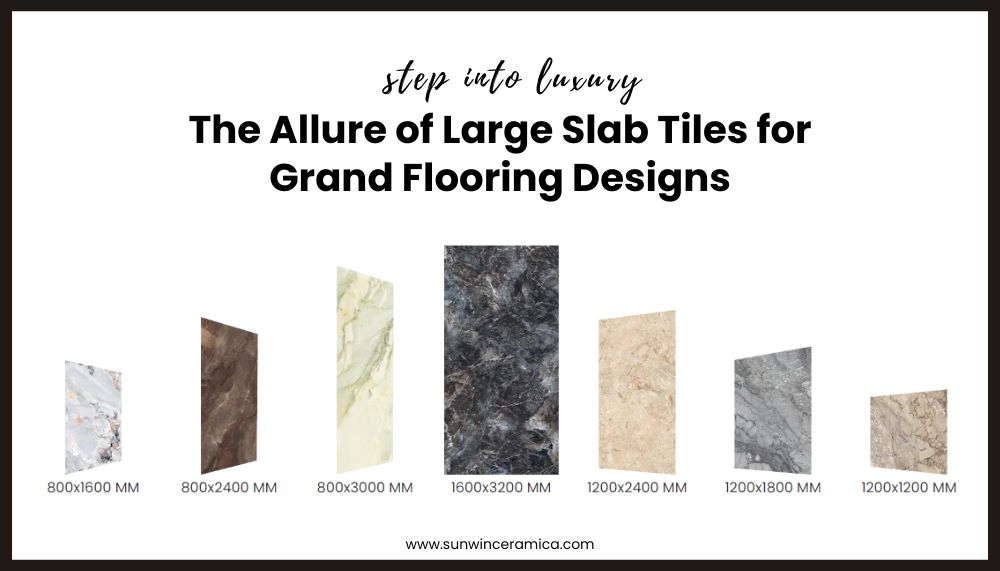
- Large format options
- Natural stone and wood aesthetics
If your market is moving toward modern interiors, porcelain gives you more creative flexibility.
Choose The Best Tiles For Your Project With Sunwin Ceramica
If you are confused between soluble salt tiles and porcelain tiles for your upcoming projects, Sunwin Ceramica can help you. Sunwin is one of India’s leading tile manufacturers and exporters and understands exactly what your projects need.
- You can select from a vast range of catalogue of tiles
- We help you choose different sizes and finishes of tiles from our collection, tailored for different project needs
- We provide end-to-end export support across the globe
- Help you in customizing tiles as per your project requirements
- Serve cost effective price in bulk orders
Connect With Sunwin Ceramica Today
If you are looking for a trusted soluble salt tiles or porcelain tiles exporter for your project needs, who delivers the best quality and price, connect with us. Explore our catalogue and experience the class itself.

Tile & Sanitaryware Manufacturer
Sunwin Ceramic is a renowned manufacturer of tiles and sanitaryware, recognized for its high-quality products & innovative designs. With a strong presence in the industry, we established ourselves as a leading brand, offering a wide range of ceramic & porcelain tiles and sanitaryware solutions.